Description
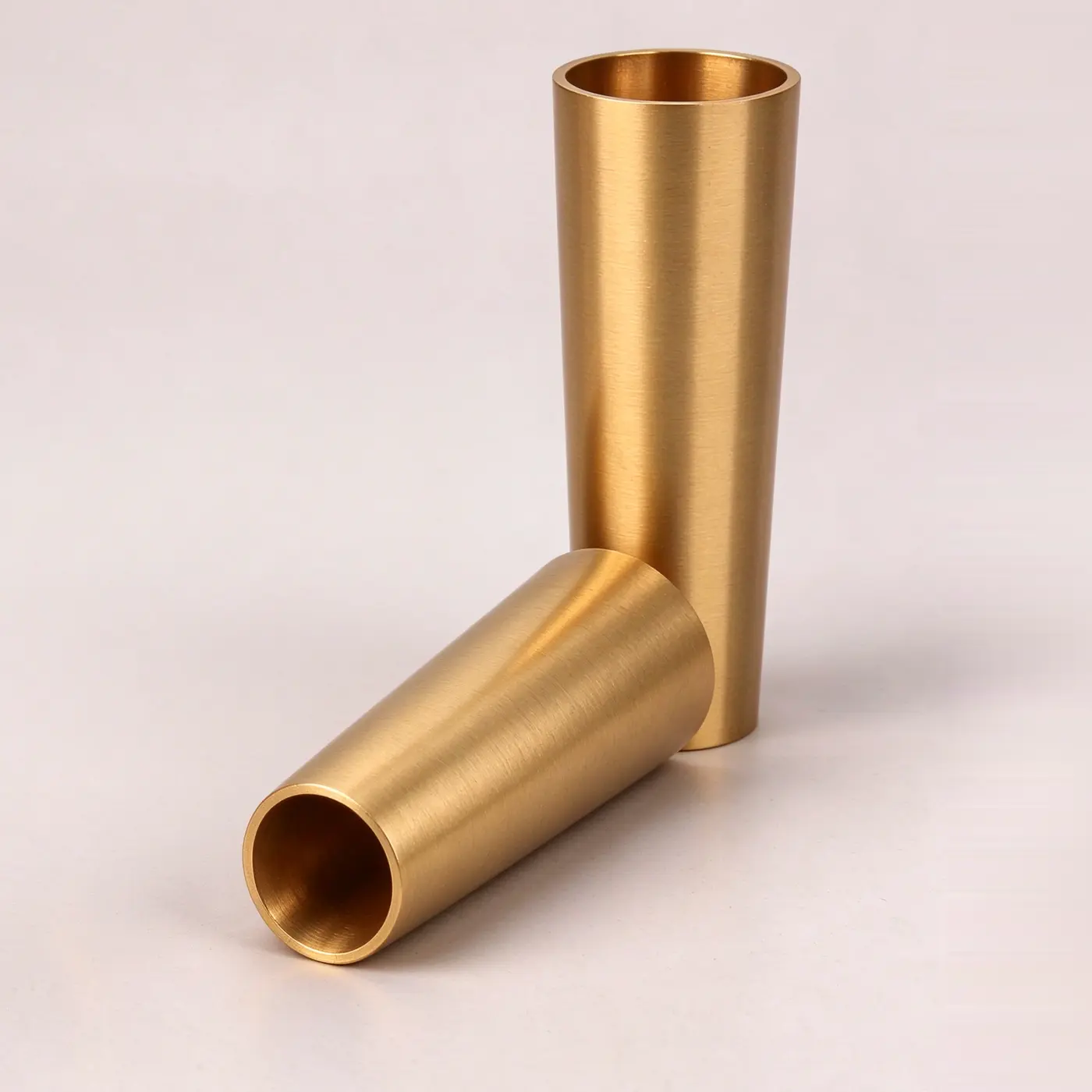
Solid brass, sleeved over the end — open at both ends
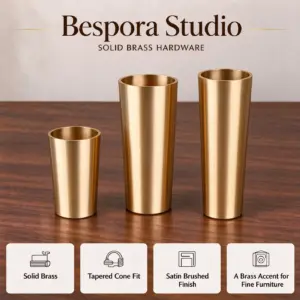
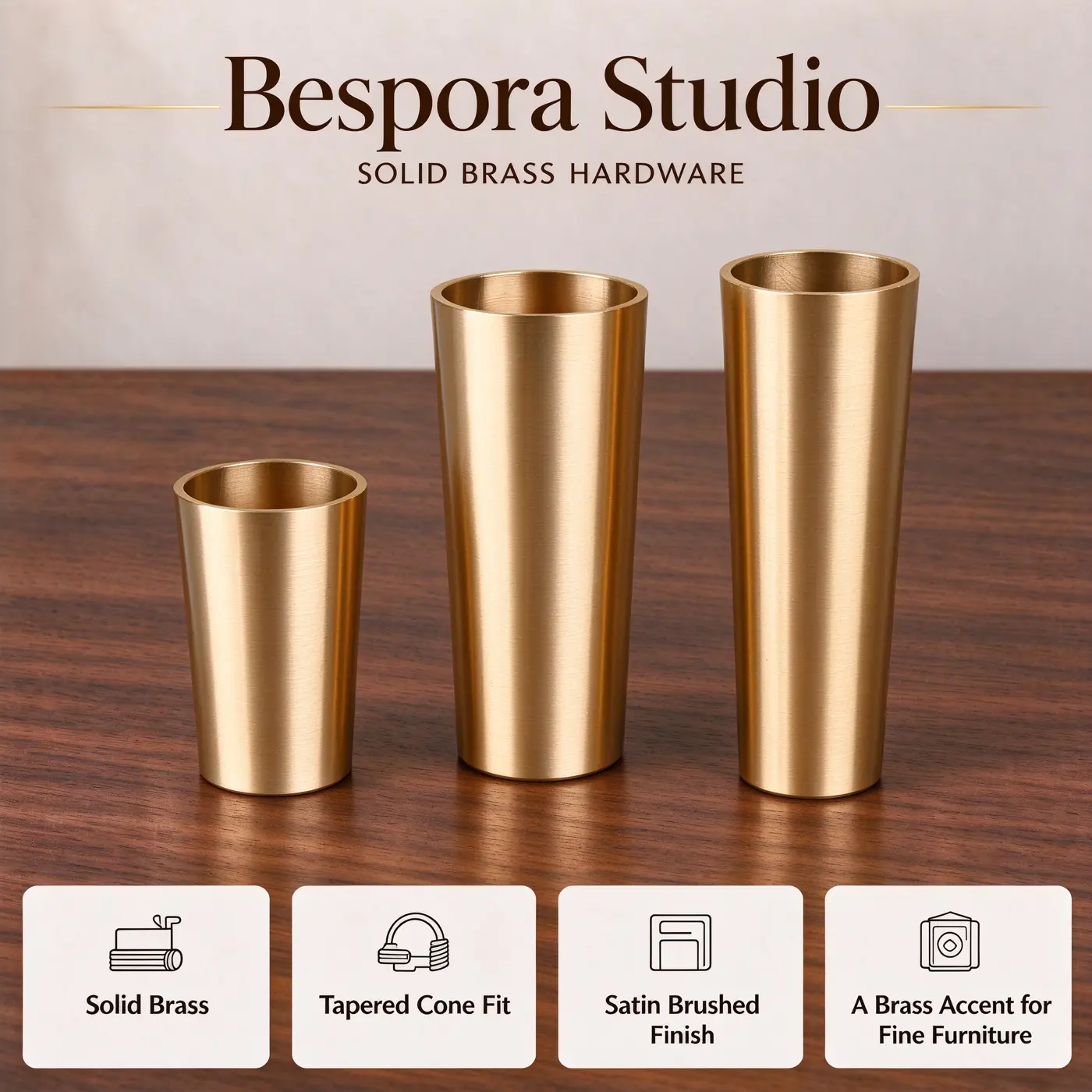
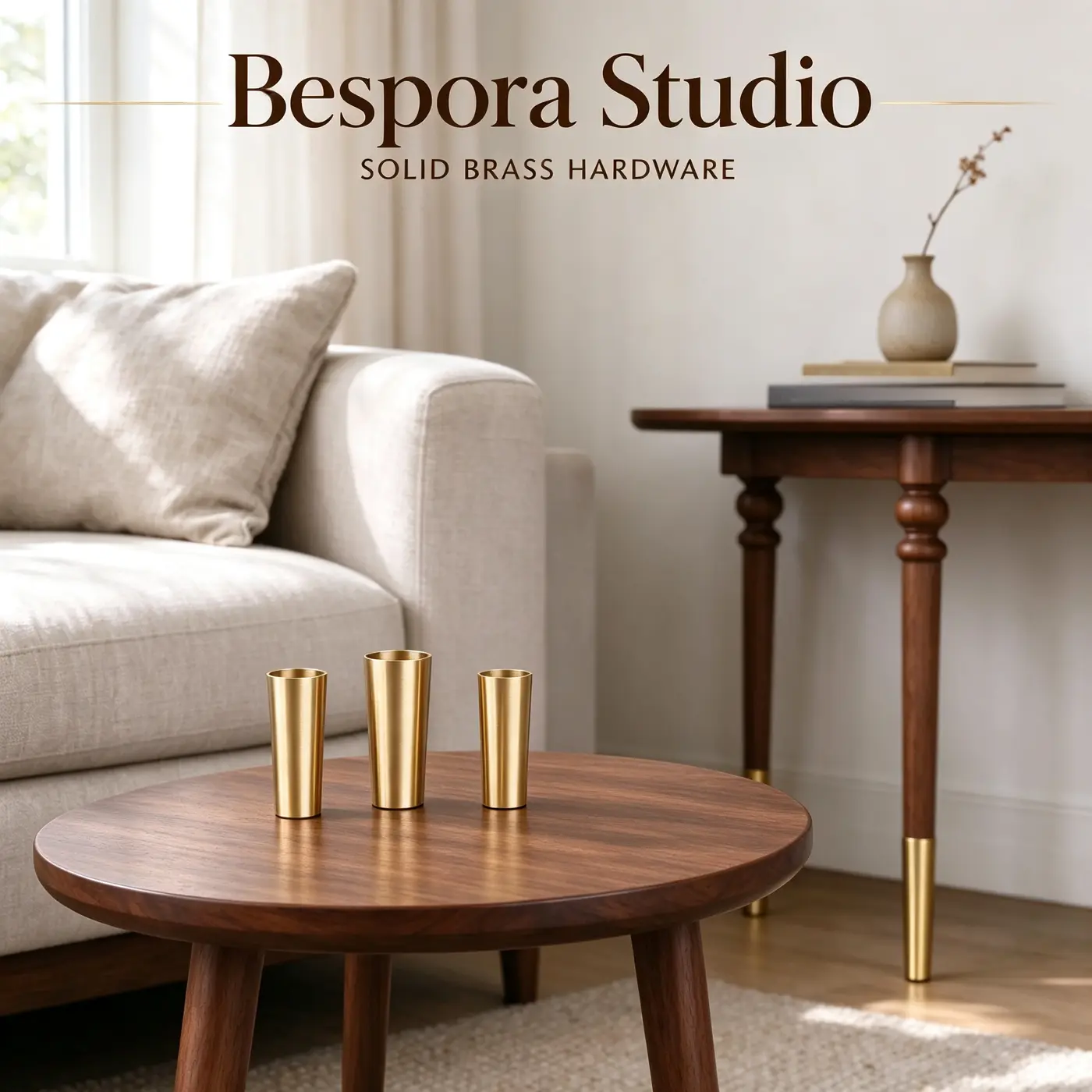
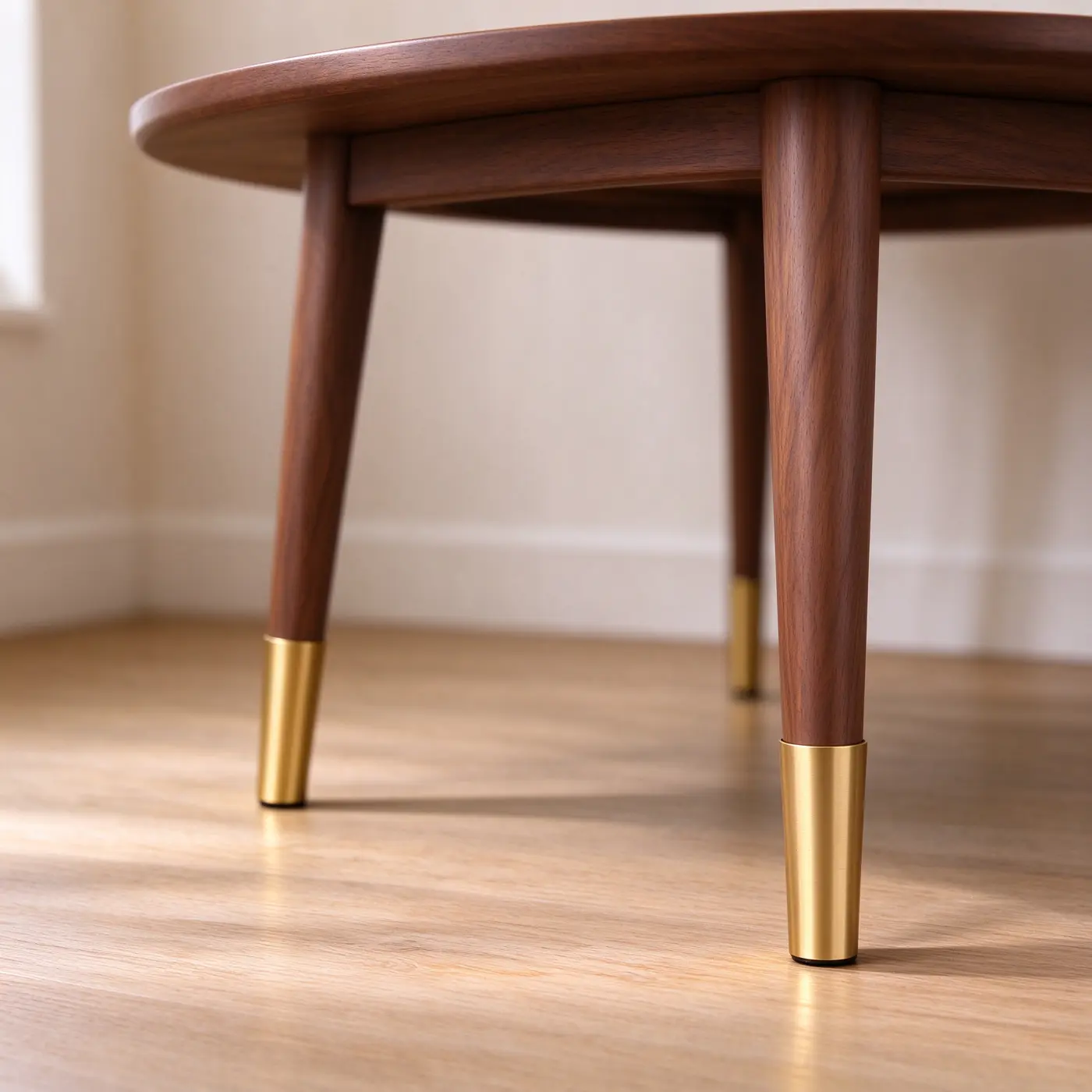
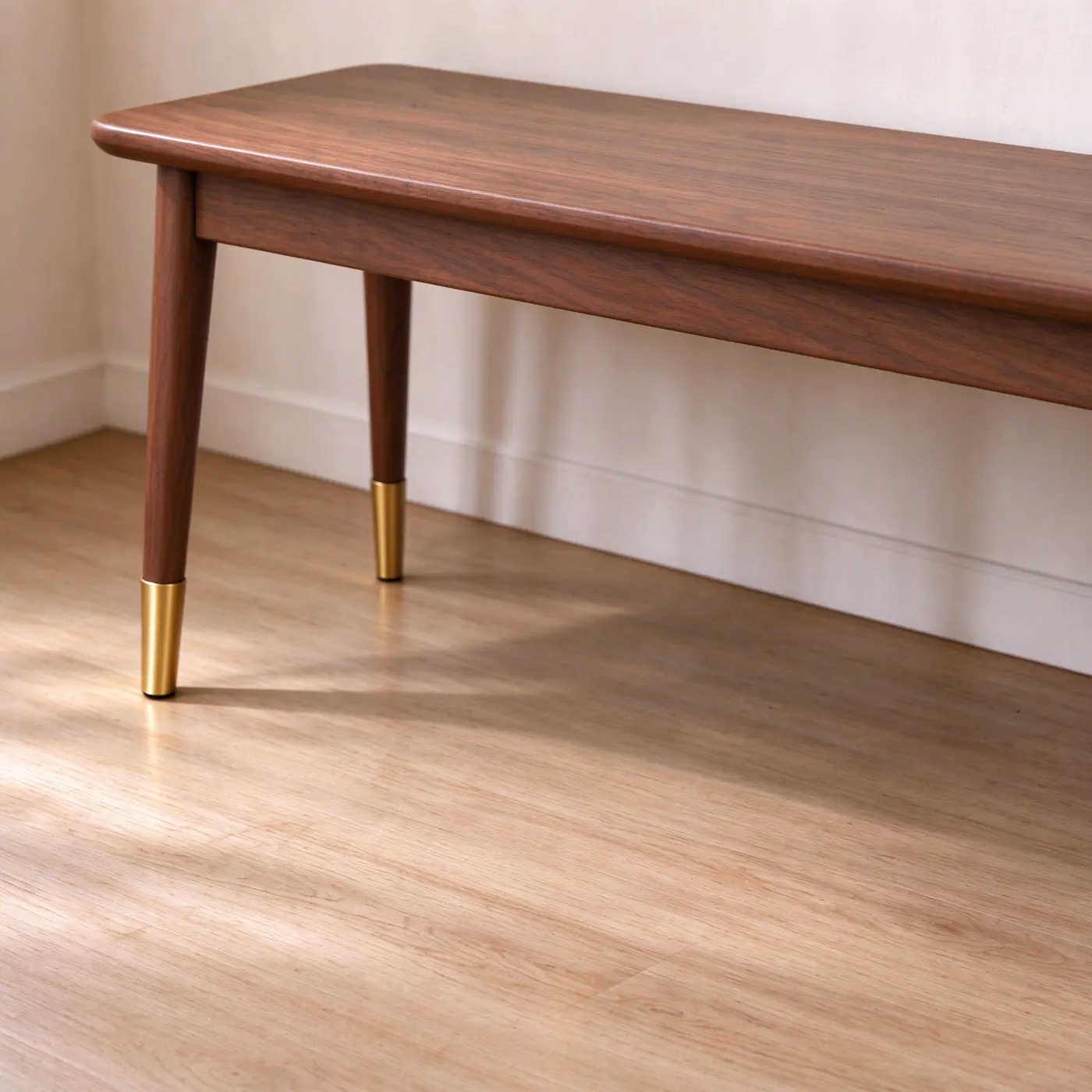
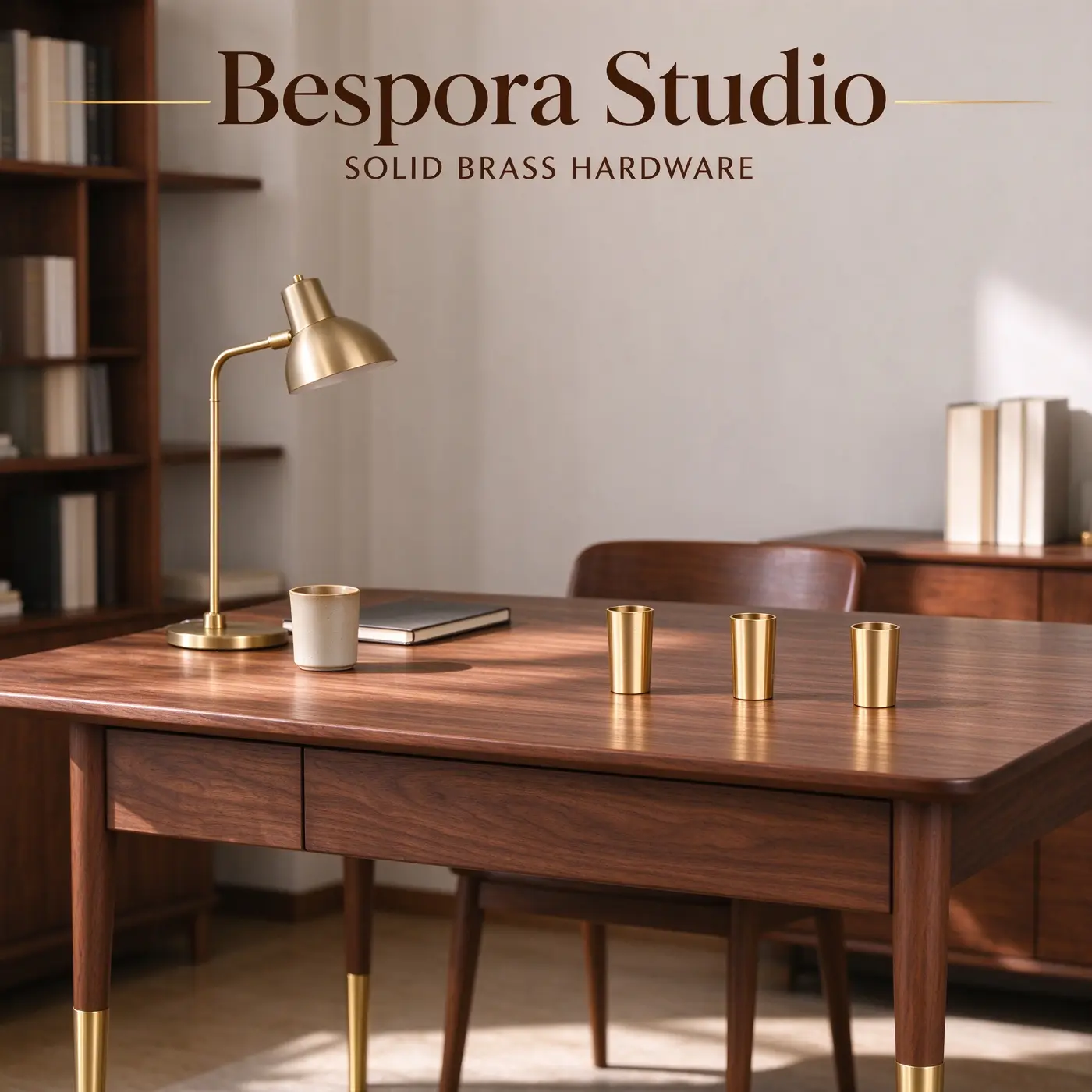
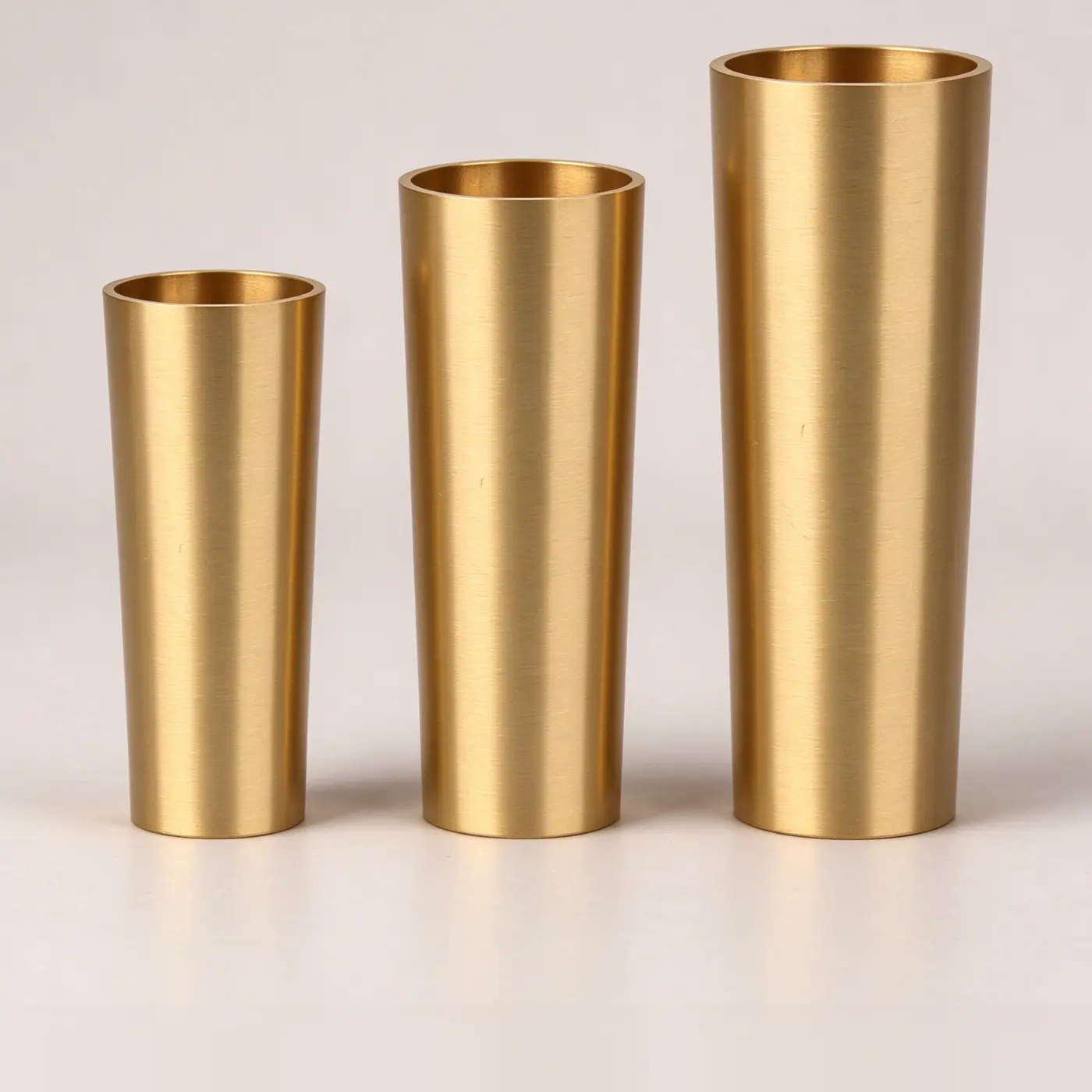
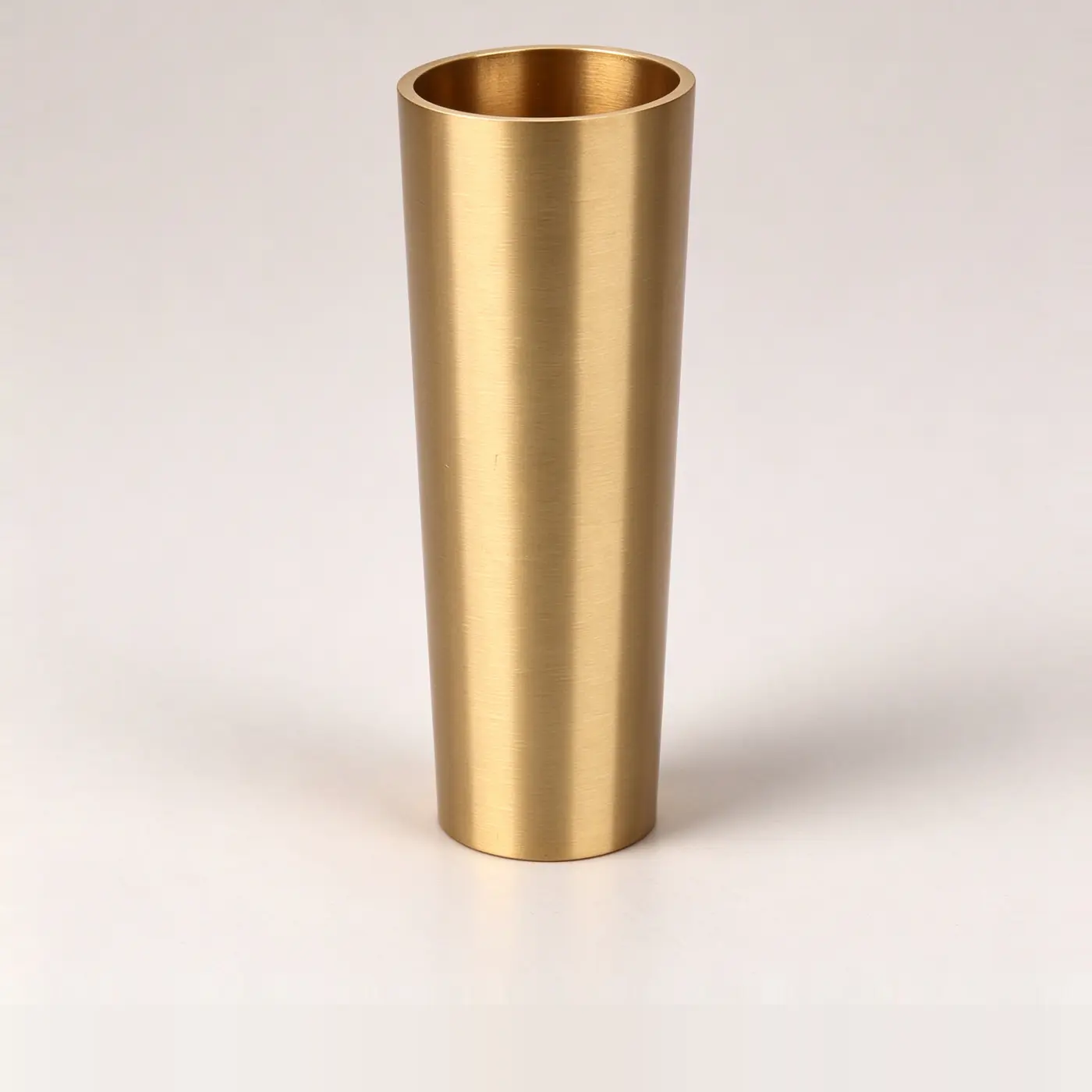
A quiet upgrade that lasts for decades. Turned from solid brass with a taper, this ferrule sheathes the lower end of a tapered wooden furniture leg. Both ends are open, so the leg passes straight through: the brass wraps the leg rather than capping it, and the wooden tip stays exactly where it has always been — on the floor. The ferrule takes the scuffs, chair-back knocks and vacuum-brush wear that chew up a bare leg end, and adds the weight and warmth of real metal. Satin brushed by hand, it reads as a soft, even matte rather than a mirror shine.
Why solid brass
- Solid brass, not plated — a 1.3–1.5 mm wall of solid brass through and through. No plating to flake, chip or peel.
- Tapered, for tapered legs — the classic conical profile for mid-century, Danish and Windsor furniture legs, benches, canes and walking sticks.
- Open at both ends — a straight-through sleeve. The leg slides in and stays visible, so nothing has to be cut to length and the wood tip remains the surface that meets the floor.
- Protects the leg, not replaces it — it takes side scuffs and knocks instead of your timber, and makes a worn or chipped leg end look deliberate.
- 15 sizes in stock — top Ø 28–55 mm, base Ø 20–50 mm, height 30–100 mm, so most tapered legs are covered.
- No fixings — it slides on and is held with glue. No screws, no visible hardware.
A finish that ages into something better
Left unlacquered, every ferrule develops its own patina. In the first weeks the bright gold warms to a soft honey tone, then deepens over the months into the mellow antique bronze collectors love — never dull, never flaking, just richer with time. It is the opposite of plated hardware that chips and peels. Prefer the original look? A quick wipe with brass polish (or lemon juice and salt) brings the gleam straight back. The patina is entirely yours to keep or reset.
How to choose your size — always by the INNER diameter
These ferrules are tapered sleeves, open at both ends. Measure your leg twice — at the very tip, and at the point where the ferrule’s top rim will sit — then pick the size whose inner diameter is closest to each measurement: the same, or up to about 0.5 mm larger. For TAPERED (conical) legs only — on a straight cylindrical leg the ferrule stops part-way and sits loose.
Because both ends are open, you do not need to cut or shorten the leg: slide it on, check that the taper seats evenly with no rock, then fix it with wood glue or two-part epoxy. Between two sizes, take the larger and bed it in glue, or sand the leg a fraction.
| Size (top Ø × base Ø × height × wall) mm | Inner Ø top → base (mm) | Fits your tapered leg |
|---|---|---|
| 28 × 23 × 75 × 1.5 mm | 25 → 20 | tip Ø ≈20 mm · Ø ≈25 mm at 75 mm up |
| 29 × 22 × 80 × 1.5 mm | 26 → 19 | tip Ø ≈19 mm · Ø ≈26 mm at 80 mm up |
| 29 × 25 × 35 × 1.5 mm | 26 → 22 | tip Ø ≈22 mm · Ø ≈26 mm at 35 mm up |
| 30 × 20 × 100 × 1.5 mm | 27 → 17 | tip Ø ≈17 mm · Ø ≈27 mm at 100 mm up |
| 30 × 24 × 100 × 1.5 mm | 27 → 21 | tip Ø ≈21 mm · Ø ≈27 mm at 100 mm up |
| 30 × 25 × 60 × 1.5 mm | 27 → 22 | tip Ø ≈22 mm · Ø ≈27 mm at 60 mm up |
| 31 × 25 × 70 × 1.5 mm | 28 → 22 | tip Ø ≈22 mm · Ø ≈28 mm at 70 mm up |
| 33 × 24 × 62 × 1.5 mm | 30 → 21 | tip Ø ≈21 mm · Ø ≈30 mm at 62 mm up |
| 35 × 26 × 100 × 1.5 mm | 32 → 23 | tip Ø ≈23 mm · Ø ≈32 mm at 100 mm up |
| 35 × 30 × 30 × 1.5 mm | 32 → 27 | tip Ø ≈27 mm · Ø ≈32 mm at 30 mm up |
| 38 × 33 × 80 × 1.3 mm | 35.4 → 30.4 | tip Ø ≈30.4 mm · Ø ≈35.4 mm at 80 mm up |
| 38 × 34 × 35 × 1.5 mm | 35 → 31 | tip Ø ≈31 mm · Ø ≈35 mm at 35 mm up |
| 40 × 32 × 50 × 1.5 mm | 37 → 29 | tip Ø ≈29 mm · Ø ≈37 mm at 50 mm up |
| 43 × 27 × 90 × 1.5 mm | 40 → 24 | tip Ø ≈24 mm · Ø ≈40 mm at 90 mm up |
| 55 × 50 × 40 × 1.5 mm | 52 → 47 | tip Ø ≈47 mm · Ø ≈52 mm at 40 mm up |
These are OUTER dimensions. Inner Ø = outer Ø − 2 × wall thickness. Example: a 35 × 30 × 30 × 1.5 mm ferrule has a 32 mm inner top opening and a 27 mm inner base opening.
Where they work
Mid-century and Danish dining, side and coffee tables · chairs, stools and bar stools · benches and Windsor chairs · writing desks and sideboards · bed and sofa legs · vintage restoration and upcycling · canes, walking sticks and crutches · wooden poles and curtain rails.
Specifications
Solid brass, not plated · satin brushed, hand-finished, unsealed (patinas over time) · 1.3–1.5 mm wall · open at both ends (straight-through sleeve, no closed base) · glue-mounted · top Ø 28–55 mm, base Ø 20–50 mm, height 30–100 mm · approx. 36–121 g per piece · sold per piece.
Care
Brass darkens naturally with handling and air — most buyers want exactly that, a warm antique tone over the first months. To restore the brightness, wipe it with brass polish, or a soft cloth and a little lemon juice and salt. Avoid abrasive pads, which scratch the brushed surface. Because the brass is open at the base, the wooden tip still carries the load on the floor — treat it as you would any wooden leg, and add a self-adhesive felt pad under the tip if you want extra protection.
Production & delivery
Each order is hand-picked, packed and dispatched within 1–3 business days. Custom sizes are made to order in 5–10 business days. Shipping is tracked and insured, with duties and taxes included (DDP) for the destinations we serve.
Need a size that isn’t listed — or a larger quantity?
We can make these ferrules to your own top and base diameter, height and wall thickness, and we quote gladly for bulk and trade orders — furniture makers, restoration workshops and joinery. Get a custom quote.
FAQ
- Do I need to cut the leg? No. Because both ends are open, the leg passes straight through and nothing has to be trimmed. Slide the ferrule on, check the taper seats without rocking, then glue it in place.
- Is this the same as your closed-base tapered cap? Not quite. The closed-base tapered leg cap seals the leg end, so the brass base meets the floor. This ferrule is open at both ends, so the wooden tip stays exposed and remains the floor-contact point. Choose this one if you want to keep the original wood tip, or you cannot shorten the leg; choose the closed-base cap if you want brass on the floor.
- Straight legs instead of tapered? Use our round leg caps for straight cylindrical legs, or browse all brass leg caps.
- Will the brass tarnish? Yes, naturally, deepening to a warm antique tone. This is normal and reversible: polish and the shine returns. We leave it unsealed so the patina develops.
Why Bespora
We work directly with brass workshops, so you get hand-finished metalwork without the gallery markup. Every order ships insured and tracked, with duties and taxes included (DDP).